Neighbour’s Renovation Damaging Your Home in Malaysia? Here’s What You Can Do
If a neighbour’s ongoing construction work has caused cracks in your ceiling, roof leaks or falling debris onto your property, you are not without options — even when direct requests have been ignored and a complaint to the local council has produced no visible result.
This guide walks you through the practical steps: what to document, who to contact, which type of professional you need, and when it makes sense to consider formal legal action.
What the Damage Can Look Like
A case shared on a Malaysian forum describes a resident of a double-storey terrace house in Overseas Union Garden, Kuala Lumpur, whose neighbour began a major renovation in April 2012 — work that continued for well over a year with no clear end date. The neighbour, who claimed to be a contractor himself, gave no advance notice, installed no protective sheeting to contain dust or debris, and was attempting to convert the property from two storeys to three or three-and-a-half storeys.
The damage that accumulated on the affected home included:
- A red brick that fell through the roof, breaking the ceiling and damaging the staircase — while family members were inside the house
- Repeated roof leaks during the monsoon season, with rainwater soaking through onto a bed
- A cracked structural beam
- Fungal growth on interior walls from prolonged moisture exposure
- Peeling paint and water stains throughout affected rooms
- A large hole in the ceiling through which pigeons were entering
- Construction debris scattered across the rear compound
- A warped and water-damaged wooden wardrobe
Each time the family raised the issues, the neighbour denied responsibility and reportedly told them to take him to court if they believed otherwise. A complaint lodged with DBKL had produced no action at the time the account was posted.
Stop Self-Checking Once Safety Is at Risk
You can safely note visible surface damage — peeling paint, water stains, debris in your compound, gaps in the ceiling. Do not attempt to inspect a cracked beam, a compromised roof structure or any area where falling material is a possibility. If a structural element such as a beam or ceiling joist appears damaged, treat that area as unsafe and contact a building professional before anyone enters or sleeps beneath it.
Document Everything Before You Do Anything Else
Thorough documentation is the foundation of every avenue open to you — whether you pursue a council complaint, mediation or legal action.
- Photograph each item of damage with a clear date and timestamp. Capture the damage in context — for example, the ceiling crack directly below where the neighbour’s construction is happening.
- Keep a written log of every incident: date, time, what occurred, who was present and what was said.
- Save all correspondence — text messages, WhatsApp exchanges, any written response from the neighbour.
- Note the renovation activity on the days damage occurs or worsens. If a fall of bricks coincides with demolition work next door, that connection matters.
- If a professional has already assessed or repaired any of the damage, keep the invoice and any written report.
Which Authorities Can You Approach?
Your Local Council (Majlis Perbandaran or DBKL)
The local authority — DBKL in Kuala Lumpur, or the relevant Majlis Perbandaran in other areas — has powers to inspect renovation work, require the submission of approved plans and, where work is being carried out without proper permits, issue stop-work orders. If you have already complained and received no response, submit a follow-up in writing, reference your earlier complaint by date and request a written update on what action has been taken. Keep copies of everything you submit.
You can also ask the council to confirm whether the neighbour holds an approved renovation permit for the scope of work being done — particularly relevant where a two-storey house is being extended to three storeys, which typically requires planning approval.
Your Member of Parliament or State Assemblyperson’s Service Centre
Where a council complaint has stalled, a written request through your elected representative’s service centre can sometimes prompt a faster response from the relevant department. This is a practical escalation step that does not require a lawyer.
The Police — for Immediate Safety Threats
If a falling object has already entered your home and posed a direct danger to your family, this goes beyond a civil dispute. A police report creates an official record of the incident and establishes that the risk was reported to authorities. It may also support any subsequent legal claim.
When You Need a Building or Structural Professional
Before pursuing any legal claim for repair costs, and before carrying out repairs yourself, engage a registered building contractor or a professional engineer to assess the structural condition of your home. Their written assessment serves two purposes: it tells you what is safe and what needs urgent attention, and it provides documented evidence of the damage and its probable cause for use in any legal or insurance context.
A cracked beam in particular warrants urgent attention from a structural engineer. Surface damage such as a leaking roof or peeling paint can be assessed by an experienced renovation contractor, but any concern about load-bearing elements needs a qualified engineer.
When approaching contractors or engineers for assessment, ask:
- Whether they can provide a written report identifying each item of damage and its likely cause
- Whether they are registered with CIDB (Construction Industry Development Board Malaysia) or, for engineers, with the Board of Engineers Malaysia
- What the scope and cost of repairs would be, broken down by item
Do You Need a Lawyer? What Type?
If the neighbour has refused to acknowledge responsibility or make good the damage, and informal and council routes have not resolved the situation, legal advice is the appropriate next step. The relevant civil concept here is private nuisance — where a neighbour’s activity on their own property unreasonably interferes with your use and enjoyment of yours, or causes physical damage to it.
You would be looking for a civil litigation lawyer with experience in property or neighbour disputes. Free or subsidised legal advice is sometimes available through:
- Bar Council Malaysia’s Legal Aid Centre — eligibility is assessed based on financial means
- Legal Aid Bureau (Jabatan Bantuan Guaman) — a government scheme for those who qualify
- Some municipal councils offer periodic free legal clinics; it is worth asking your local council office directly
A lawyer can advise you on the strength of your case, the likely costs of proceeding and whether a formal letter of demand sent to the neighbour first might prompt settlement without going to court.
What About Repair Costs?
The cost of repairing damage caused by a neighbour’s renovation varies considerably depending on what is affected. Roof leak repairs, ceiling patching, repainting, structural beam assessment and waterproofing are each priced differently, and the total depends on the extent of the damage confirmed by a professional inspection.
Because the goal in a dispute situation is eventual recovery of those costs from the responsible party, it is important to obtain itemised written quotes rather than a single lump-sum estimate. Each line item — roof repair, ceiling replacement, beam inspection, mould remediation — should be clearly listed. This makes it far easier to present the costs as part of a claim or legal demand.
Do not carry out permanent repairs while the neighbour’s construction is still ongoing and causing damage, unless the area is unsafe. Repairing a ceiling that will be breached again before the work next door is complete wastes money and may complicate a claim for the full extent of the damage.
Hiring Checks When Engaging a Contractor for Assessment or Repairs
- Confirm CIDB registration for building contractors; BEM registration for structural engineers
- Request a written scope of work and itemised quote before any work begins
- Ask whether they have experience preparing damage assessment reports for dispute or legal purposes
- Confirm the warranty period for any repair work carried out
- Check that their service area covers your location before arranging a site visit
Your Practical Next Step
If you are in this situation now, the most useful immediate action is to compile your photographs, incident log and any correspondence into a single file. With that in hand, you can approach a building professional for a written damage assessment, submit or escalate a written complaint to your local council, and — if the neighbour remains uncooperative — consult a civil litigation lawyer about a formal letter of demand. Each of these steps is easier and more effective when you have clear, dated documentation to support it.
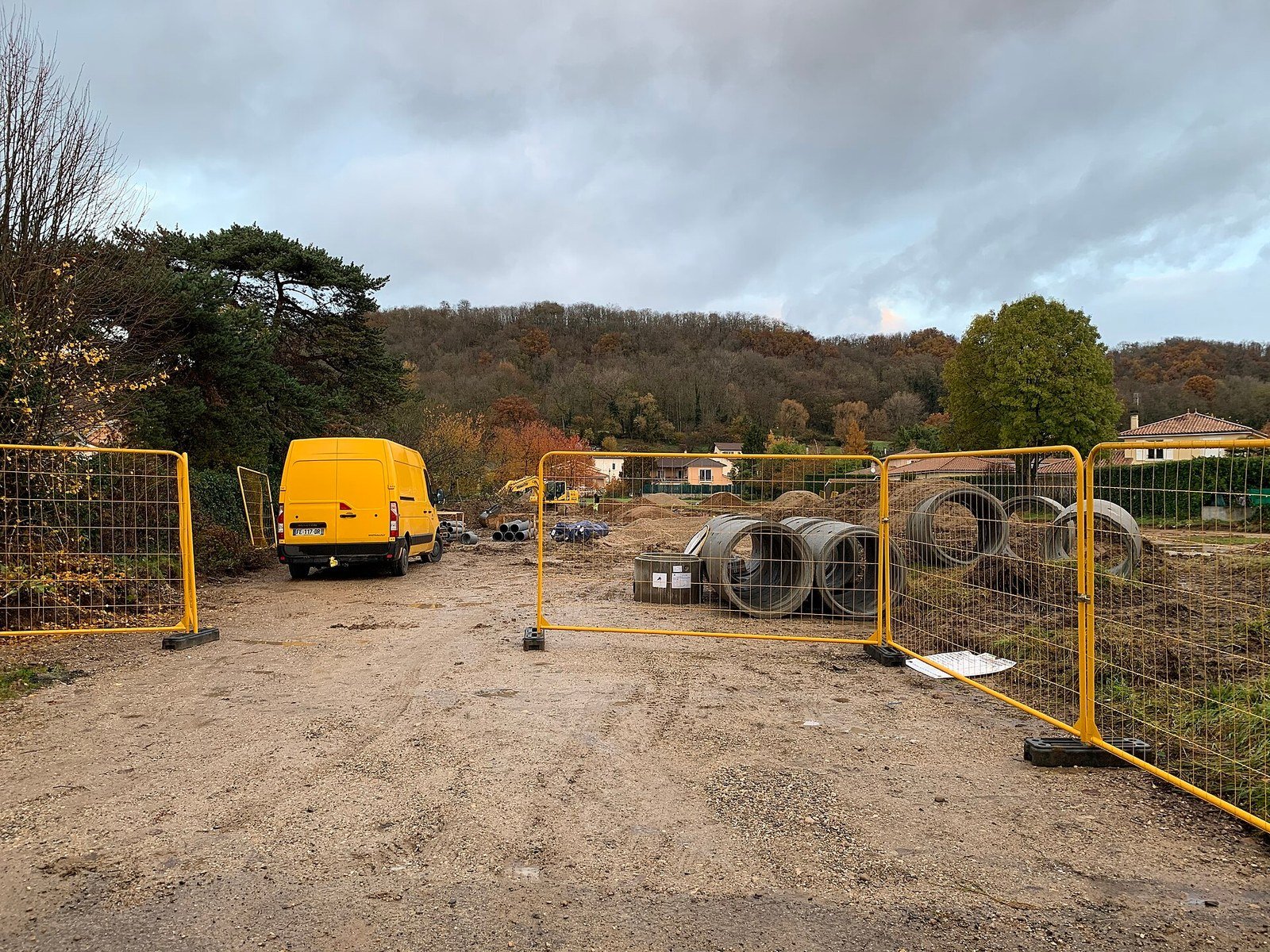
Illustrative photo: Le Mas des Andrés (construction site), November 2019 – 017.jpg by Benoît Prieur / Wikimedia Commons. CC0. Resized for display.
,_November_2019_-_017.jpg)