Getting Your New Property Keys in Malaysia: What to Do at Every Handover Stage
Waiting years for your new home to be completed is stressful enough. When the developer finally sends that notice, knowing what to check, sign and follow up on can save you from costly oversights — especially defects you might not catch until after you have moved your furniture in.
This guide walks you through each stage of the handover process for new residential properties in Malaysia, from receiving Vacant Possession to sorting out title transfer and ongoing fees.
What Happens First: Vacant Possession Notice
Vacant Possession (VP) is the point at which the developer formally hands the property to you. The property is considered completed, though some finishing work such as defect rectification may still be outstanding. VP is not the same as a fully move-in-ready home — it is the legal start of your ownership responsibilities and your defect warranty clock.
When you receive a VP notice, it will typically come with:
- A Certificate of Completion and Compliance (CCC) — formerly known as the Certificate of Fitness — signed by a registered architect or engineer, confirming the property is structurally safe and fit for occupation. This document is also known as Borang F or Perakian Siap dan Pematuhan, as noted by Recommend.my.
- A notice to schedule your inspection date.
- The keys and access cards for the unit.
Under the Housing Development Act (HDA), developers are generally required to deliver VP within 24 to 36 months from the Sale and Purchase Agreement (SPA) date for landed properties, and 36 to 48 months for multi-storey or strata-titled developments. If the developer misses this deadline, buyers are entitled to claim Liquidated Ascertained Damages (LAD) — a remedy that should be detailed in your SPA.
When you collect the keys in person at the developer’s sales office, you will need to sign a handover form that lists fixtures, electrical sockets, built-in appliances and other included items. The date you sign this form is the date your Defect Liability Period (DLP) officially begins.
Your Defect Inspection: What to Check and Why It Matters
The DLP is effectively your property’s warranty period. According to PropertyGuru’s guide on new property handover procedures, the DLP typically runs for 24 months from the VP date. Within this window, the developer is legally obligated to fix any reported defects at no cost to you.
Do your inspection as early as possible — ideally before you bring in any furniture. An empty property is far easier to assess. Use the developer’s Defect Complaint Form if one is provided, and note every issue, even minor ones. If you skip something now, you bear the repair cost later.
Most developers will allow you to engage an independent surveyor or professional inspector to assist. This is increasingly common practice, as more developers also use independent inspection agencies prior to handover to verify build quality.
Exterior Checks
| Area | What to Look For |
|---|---|
| Walls and paintwork | Cracks, uneven paint, signs of poor finishing |
| Doors and windows | Smooth operation, secure latches, no warping or misalignment in frames |
| Roof and ceiling (landed) | Water stains, cracks, visible deformities — check again during rain |
| Balcony and outdoor areas | Loose railings, cracked tiles, functional drainage |
| Grilles and gates | Secure fit, no rust or breakage |
| Parking bay | Adequate space, clear markings, no structural obstructions |
| Shared facilities (strata) | Condition and functionality of gym, pool, playground and common corridors |
Interior Checks
| Area | What to Look For |
|---|---|
| Floors | Cracks, chips, uneven surfaces; tap tiles lightly with a coin to detect hollow spots beneath |
| Walls | Cracks, dents, water damage, peeling paint, uneven plastering or skirting |
| Ceiling | Cracks, stains, leaks — especially in bathrooms and kitchens; verify during rain |
| Doors and windows | Proper fit, no misalignment, intact window panes, functioning latches and hinges |
Plumbing and Sanitary Ware
- Turn on all taps and showerheads to check for consistent water pressure and no leaks from pipes or faucets.
- Test the toilet flush in every bathroom.
- Check that all sinks, shower trays and floor traps drain properly — slow drainage may point to a blocked pipe.
- Confirm the water meter is installed and recording accurately.
Electrical Points
- Test every light switch and confirm all fixtures are working.
- Plug a device into every power outlet to confirm it is live.
- Switch on any included fans or air-conditioning units to verify they cool adequately.
- Test the circuit breaker by tripping and resetting it to confirm safety features are functional.
Fixtures and Built-Ins
- Open and close all cabinets and wardrobe doors — check hinges, drawer runners and alignment.
- Inspect kitchen countertops for chips or cracks and test the kitchen sink drainage.
If Defects Are Not Fixed
Submit your completed defects checklist to the developer. If issues are not resolved within 30 days, send a formal written notice with an estimated rectification cost. Allow a further 14-day grace period. If the developer still fails to act, you may proceed with your own rectification and recover the cost through the stakeholder lawyer who holds 5% of the purchase price in the Housing Development Account.
Fees and Taxes That Kick In After Handover
Once VP is delivered, the final 5% instalment of the purchase price typically becomes due. For strata properties, additional ongoing charges apply.
Maintenance Fee
This covers the upkeep of common areas and shared amenities — lifts, corridors, the pool, landscaping, security and the guardhouse. For condominiums, the developer will often invoice the first three months’ maintenance when you sign the handover form, according to Recommend.my.
Sinking Fund
A separate fund set aside for major works such as repainting the building, replacing shared equipment or large-scale repairs to common areas. It is managed by the Joint Management Committee or, once established, the Management Corporation.
Property Taxes
- Quit Rent — an annual charge payable to the state authority, generally a modest amount.
- Assessment Tax — a twice-yearly local council charge based on the annual rental value of the property.
- Rental Income Tax — if you rent out the property, rental income must be declared and is taxed at a progressive rate from 0% to 30%.
- Real Property Gains Tax (RPGT) — if you sell within five years of the SPA date, a 15% RPGT applies to the gains.
Loan Progressive Payments: What Those Notices Mean
Between your SPA signing and VP, you will likely receive several notices about progressive loan drawdowns. These are standard — your bank releases portions of your loan to the developer each time a construction milestone is certified. The notices are sent to keep you informed; your lawyer and bank handle the actual payments. No action is required from you unless your bank specifically requests it.
Administrative Steps: Title Transfer and Stamp Duty
Receiving your keys is not the last step. Several legal and administrative tasks follow.
Transfer of Title
Your name will be registered on the property title at the Land Office for freehold properties. For leasehold or strata properties, the individual strata title may take longer, as it must first be issued by the relevant authority before the transfer can be completed.
Stamp Duty on Transfer
Stamp duty is payable when the property title is transferred. The amount is calculated on either the purchase price or the market value of the property — whichever is higher. Your lawyer will guide you on the applicable rate.
Memorandum of Transfer (MOT)
You will need to complete Borang 14A for the Memorandum of Transfer and have it stamped at the appropriate government office. Your conveyancing lawyer typically handles this process on your behalf.
Getting the Property Ready to Move In
Once the defect inspection is done and legal paperwork is underway, most new properties still need several services before they are genuinely liveable.
Utilities Applications
Apply for utilities connections as early as possible — some developers prompt buyers to do this before VP, others only after. Typical applications include:
- Electricity: TNB new account application
- Water: The relevant state water utility (for example, SYABAS in Kuala Lumpur, Putrajaya and Selangor)
- Piped gas (where available): Gas Malaysia natural gas supply application
- Internet: Your preferred broadband provider
Air-Conditioning Installation
Many new properties are handed over without air-conditioners. If your unit does not include them, engage a licensed air-conditioning installer to plan the placement of indoor units and compressors, assess power requirements and run the necessary piping before walls are plastered or false ceilings are installed.
Lighting and Fans
New properties typically come with bare wiring points. Plan your lighting layout — including ambient, task and accent layers — before the renovation work begins, so electricians can route cables appropriately.
Renovation and Interior Work
It is far easier to carry out kitchen fitting, built-in joinery, flooring upgrades and other renovation work while the property is empty. Engage a renovation contractor or interior designer early so that work can be sequenced properly — utilities first, then wet works, then carpentry and finishing.
When hiring any contractor or installer for your new home, check that they are registered with the relevant professional body or CIDB, ask for a written quotation with a clear scope of work, confirm warranty terms, and verify that they have completed similar projects in your area. Getting at least two to three quotes before committing is a practical safeguard.
A Practical Order for Your First Few Weeks
- Attend the VP appointment, collect keys and sign the handover form — note the date carefully as it starts your DLP.
- Conduct a thorough defect inspection before moving anything in; submit your defects list promptly.
- Get the management office contact and clarify maintenance fee amounts and payment arrangements.
- Apply for TNB, water and other utilities connections without delay.
- Follow up with your conveyancing lawyer on the MOT, stamp duty and title registration.
- Plan and book air-conditioning, lighting and renovation work while the unit is still empty.
If you are unsure about any aspect of the defect process or title transfer, consult your conveyancing lawyer — that is what they are engaged for. For renovation and installation work, search for licensed contractors or installers who cover your specific area and can provide a written, scoped quotation before any work begins.
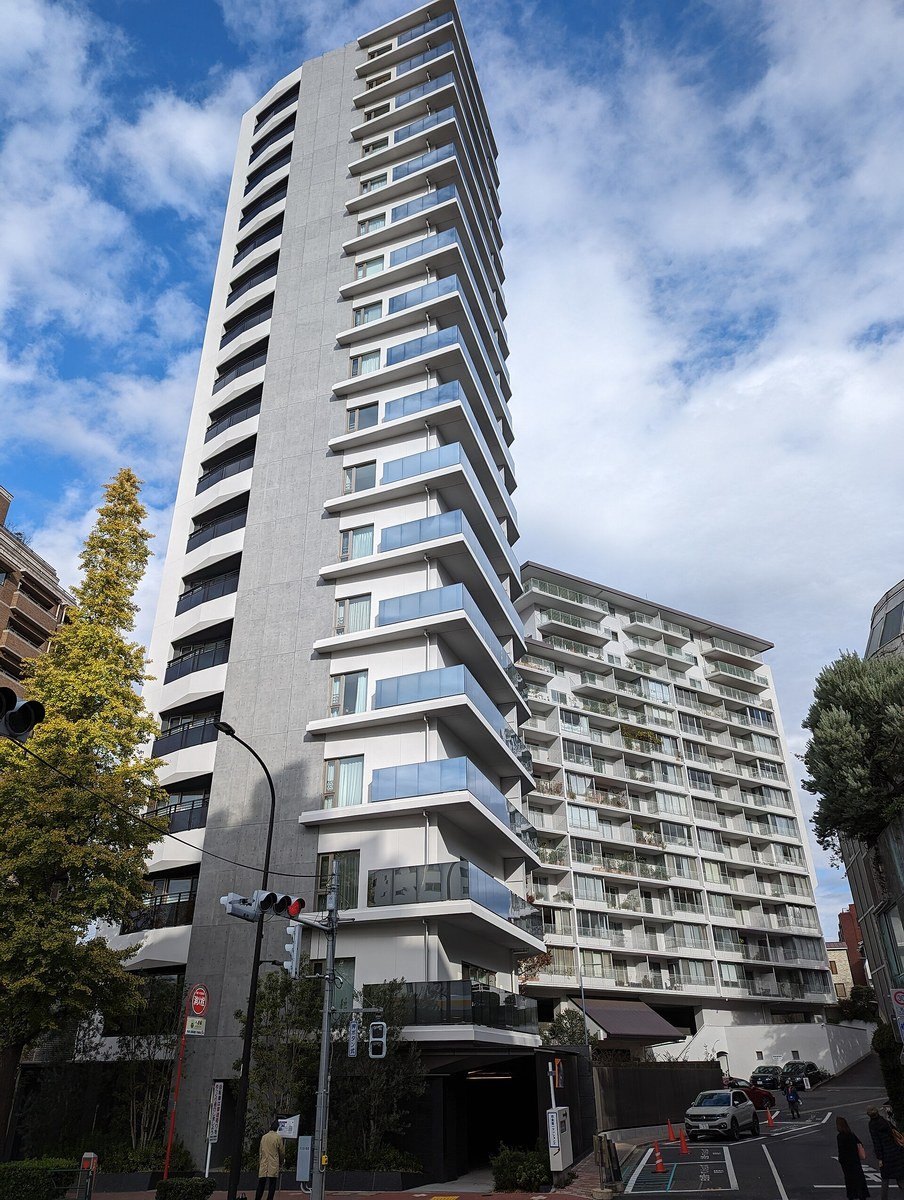
Illustrative photo: New residential building in Shirokane.jpg by Syced / Wikimedia Commons. CC0. Resized for display.
